

My easy homemade lemon curd recipe only has 5 ingredients and is thick and stable and perfect for using as a lemon spread, as a cake or cookie filling, or wherever you need a hit of lemon. It can be made with either egg yolks or whole eggs depending on what you have on hand - I will hold your hand every step of the way. I tested all the variables so that you don't have to. No tempering eggs or double boiler needed - this lemon curd recipe is all made in one pot!
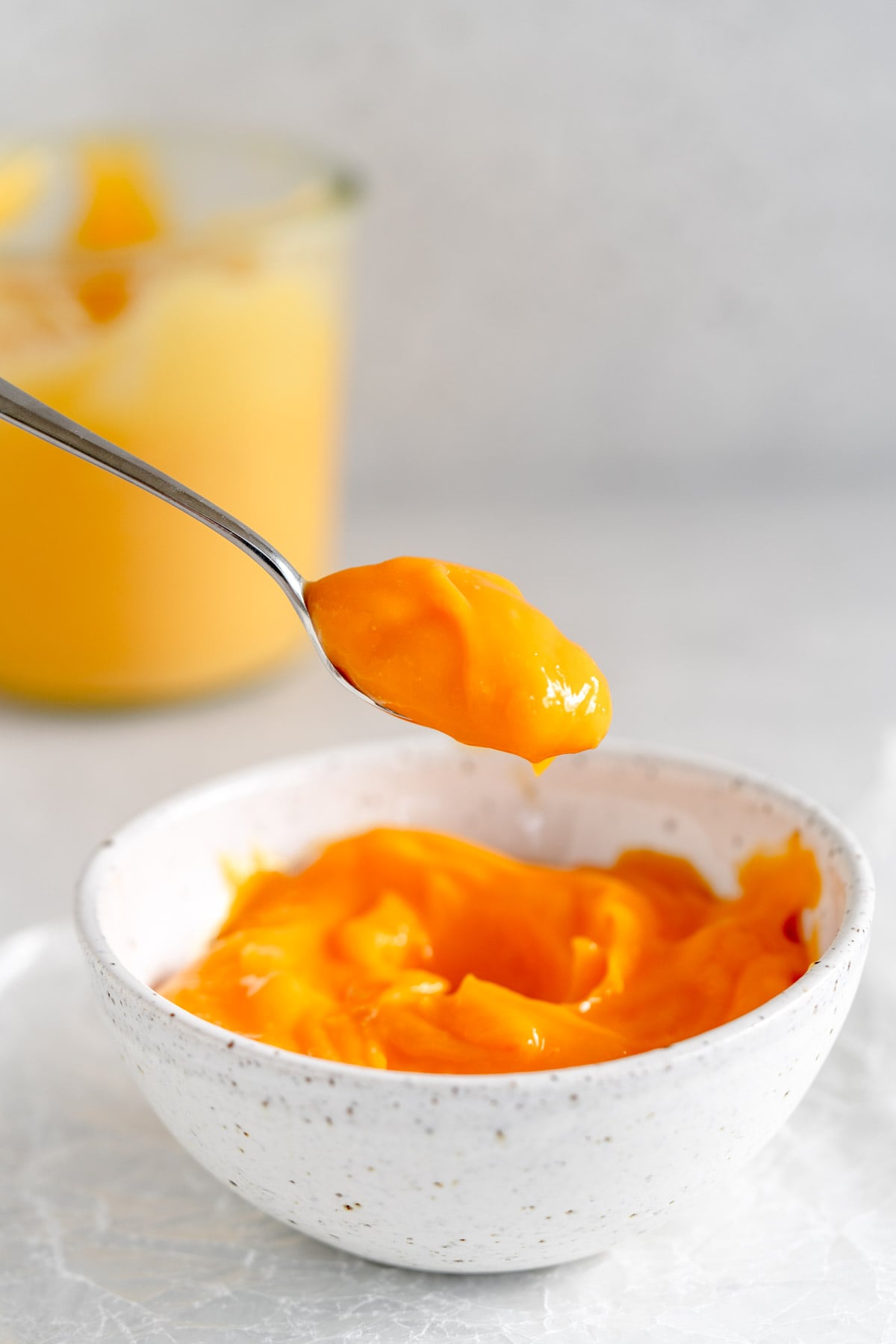
Hi hi! I am just popping in to share my easy lemon curd recipe with you! I have been making this for years and don't know why it doesn't have its own spot on the blog because it is so easy to make and so much better than store bought.
Homemade lemon curd is a great way to use up extra egg yolks if you have any on hand, although I also tested making lemon curd with whole eggs if you don't want to be left with whites.
Lemon curd is a great thing to have in your fridge to brighten up almost anything - I love serving it alongside my butter cake, or as the filling for my linzer cookies, but the options are nearly endless here.
I have made lemon curd a lot of times and read a lot of recipes online - my recipe is one which is properly thick, and stable enough to use as a cake or cookie filling without leaking everywhere. I've got you covered.
Whole Eggs vs Egg Yolk only for Lemon Curd
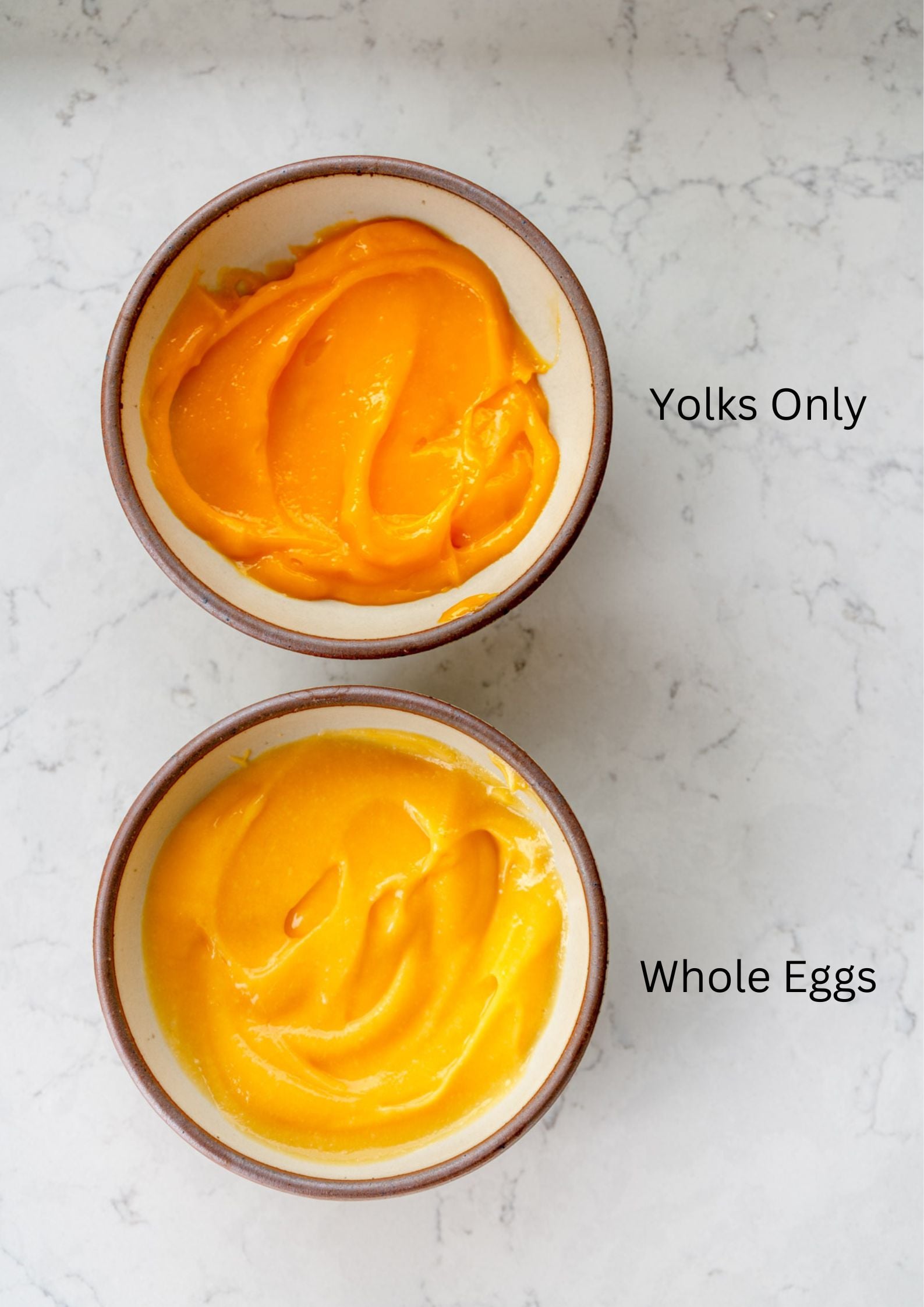
You've probably seen recipes for lemon curd made with egg yolks only, or using whole eggs, or a combination of both. Either work great and I tested the recipe both ways, so you can use whatever suits you best or what you have on hand. You can see both methods in the image below.
Egg yolk only lemon curd. This is my personal preference. Lemon curd made with egg yolks is much firmer, a little richer, and tastes a little less 'eggy' - I think that it lets the lemon flavour shine through best, and I prefer the firmer consistency as it makes it much better to use for filling cakes or cookies.
Whole egg lemon curd. This also works just as well - I made it with 3 eggs instead of 6 yolks. Whole egg lemon curd is a little looser, so works perfectly if you're looking for a lemon curd to drizzle, or to use as a lemon spread.
Basically do what you like here, both work, it just depends on the consistency that you are after (If it matters) and how many egg yolks you have on hand.
The thing to remember is egg yolks = firmer lemon curd, whole eggs = less firm lemon curd. To replace yolks with eggs, replace two egg yolks with one whole egg. Feel free to mix and match with what you have.
Don't you need to use a double boiler to make lemon curd?!
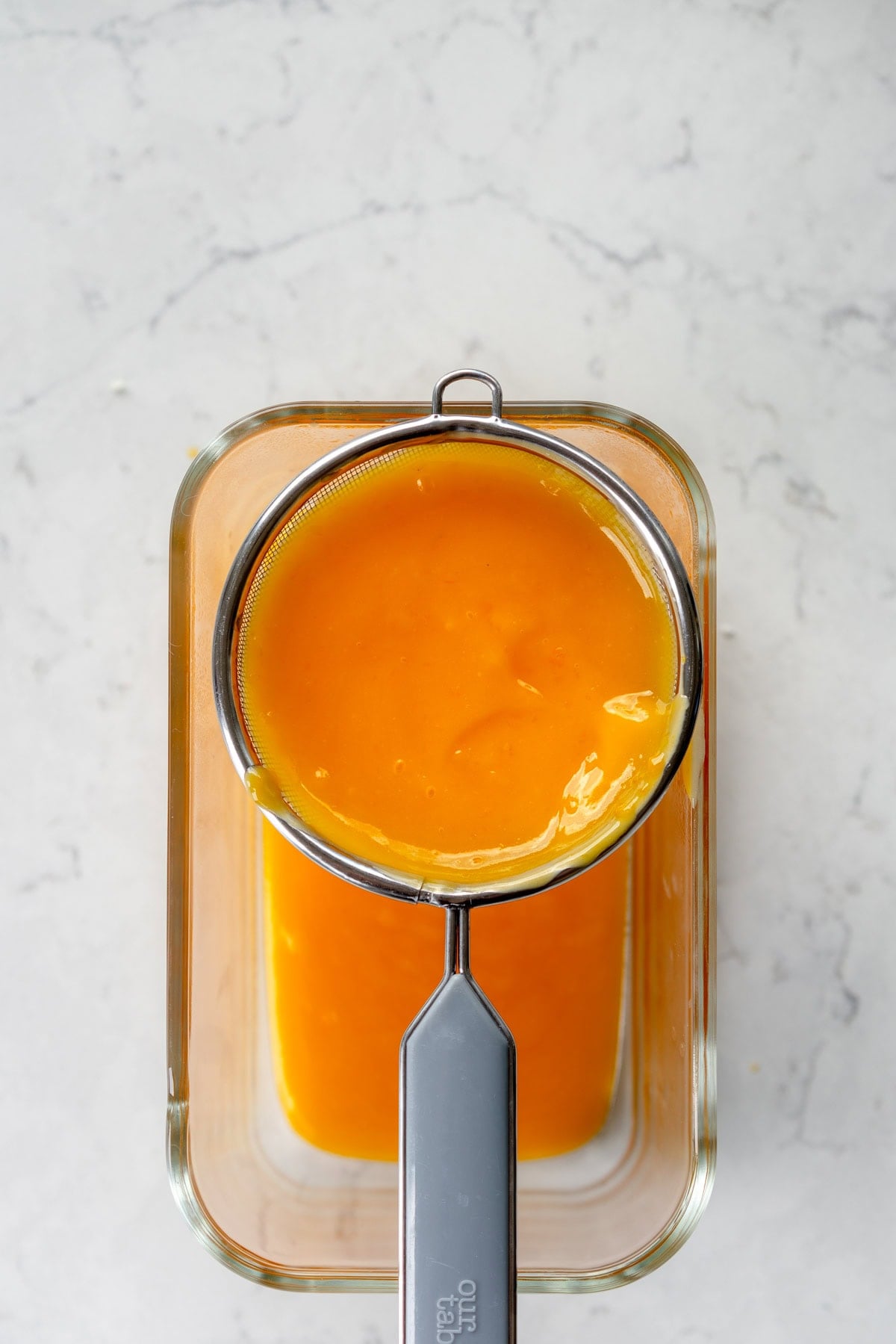
You will often see recipes which use indirect heat - where they use a double boiler (a bowl over simmering water) to make lemon curd. I found during recipe testing that this wasn't necessary - it works just fine in a pot, cooked over low to medium heat. I prefer to strain the curd before chilling it down just in case there are any cooked pieces of egg in the mix, but you absolutely can make it right in the pan - it is also much quicker!
When to add the butter - at the end or in with the rest of the ingredients?
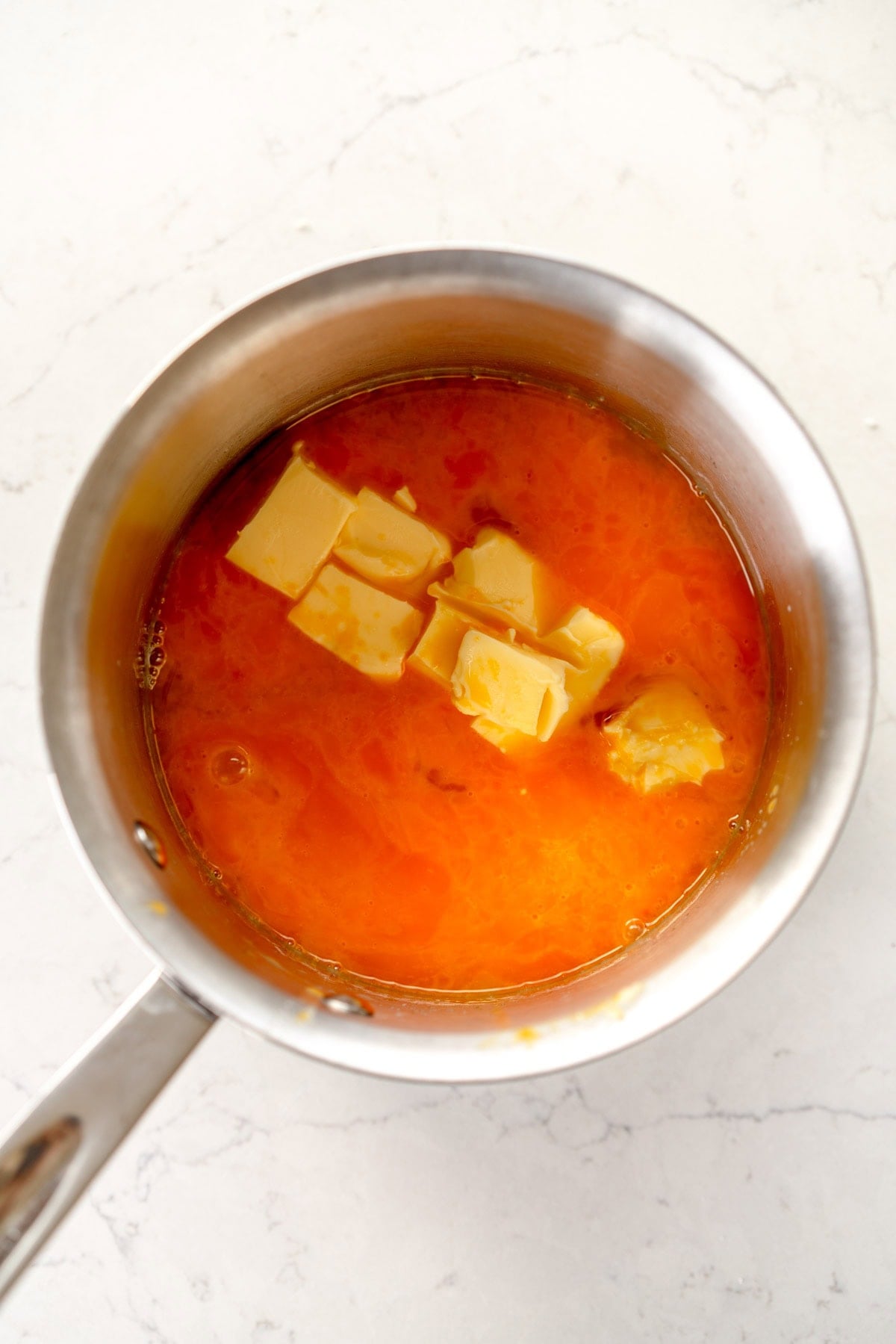
There are two ways to do this when making lemon curd - the butter can go in at the beginning with the other ingredients, or you can add the butter at the end to stop the cooking process. Again, I tested both ways during the recipe testing process and found adding the butter along with the other ingredients gives you a more silky curd - adding it toward the end the curd had a slightly fattier mouthfeel.
A few ways to tell when Lemon Curd is done
I think this is what people struggle with a little. There are a couple of ways to test for doneness when making lemon curd:
Temperature. Look for 170°f / 76°c on an instant read thermometer.
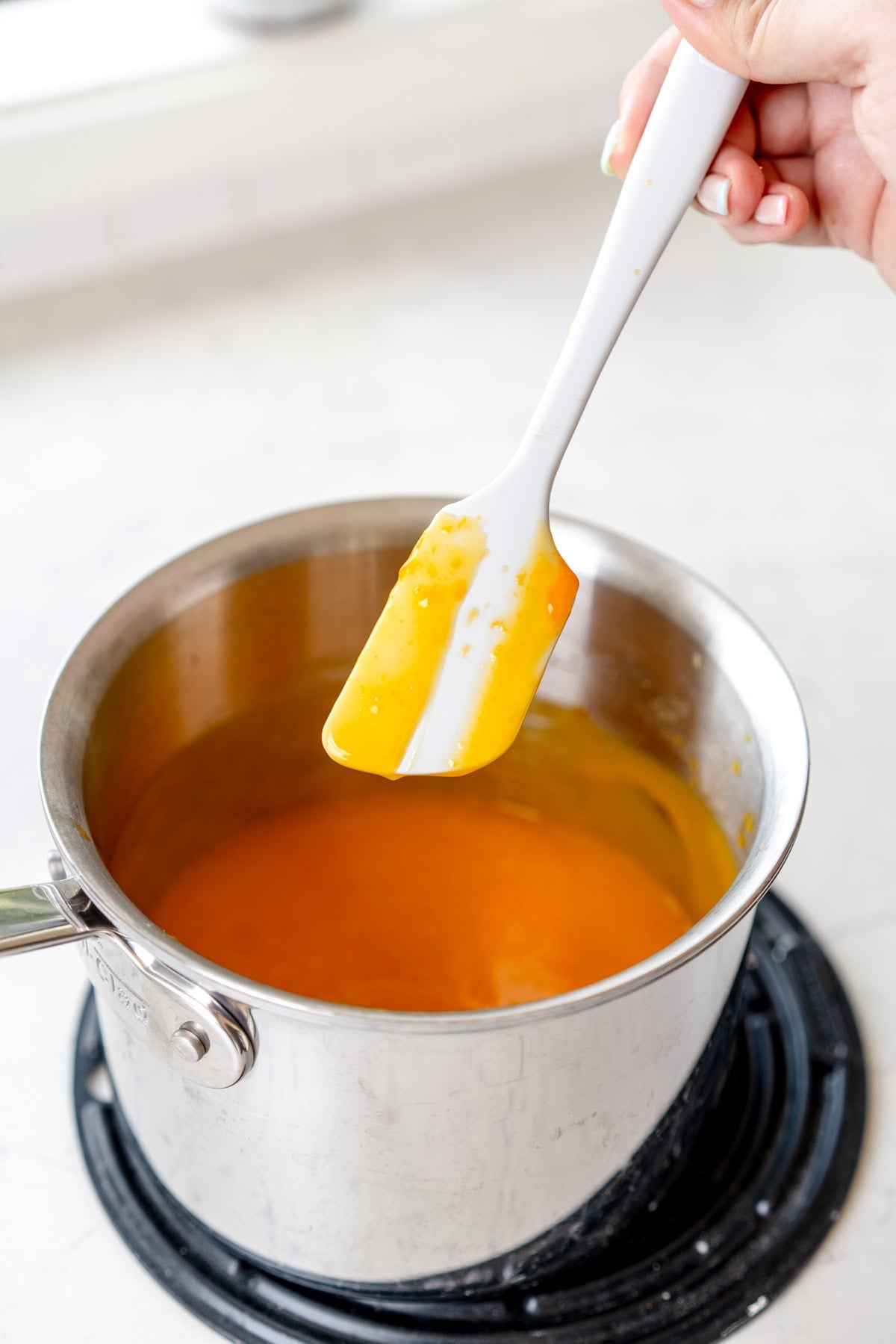
The 'line' test. When lemon curd cooks to the correct temperature it will thicken to the point that it coats the back of a spatula or spoon, and you can draw a clean line through it with your finger.
❤️ Made this recipe and love it? ❤️
I would LOVE for you to leave me a review and star rating below to let me know how you liked it! Also, please make sure to tag me on Instagram!
Answers to your baking questions
Over the years, many of you have asked me questions about:
- baking in grams
- adjusting oven temperatures
- what kind of salt to use
- and many more!
I've curated and answered them all for your easy reference in this frequently asked questions post!
Super Silky Lemon Curd
- Author: Erin Clarkson
-
 Prep Time: 5 minutes
 -
Cook Time: 5 minutes
-
Total Time: 15 minutes
-
 Yield: 8 Servings 1x
 -
 Category: Baking
 -
 Method: stovetop
 -
 Cuisine: American
 -
 Diet: Gluten-Free
 Pin Recipe
Description
My easy homemade lemon curd recipe only has 5 ingredients and is thick and stable and perfect for using as a lemon spread, as a cake or cookie filling, or wherever you need a hit of lemon. It can be made with either egg yolks or whole eggs depending on what you have on hand. I tested all the variables so that you don't have to. No tempering eggs or double boiler needed - this lemon curd recipe is all made in one pot!
Notice: JavaScript is required for this content.
Ingredients
- 100g granulated sugar
- 6g fresh lemon zest (from about 2 lemons)
- 120g freshly squeezed lemon juice
- 120g egg yolks (from about 6 eggs)
- 70g unsalted butter, cold from the fridge is fine, cut into cubes
- Pinch of salt
Instructions
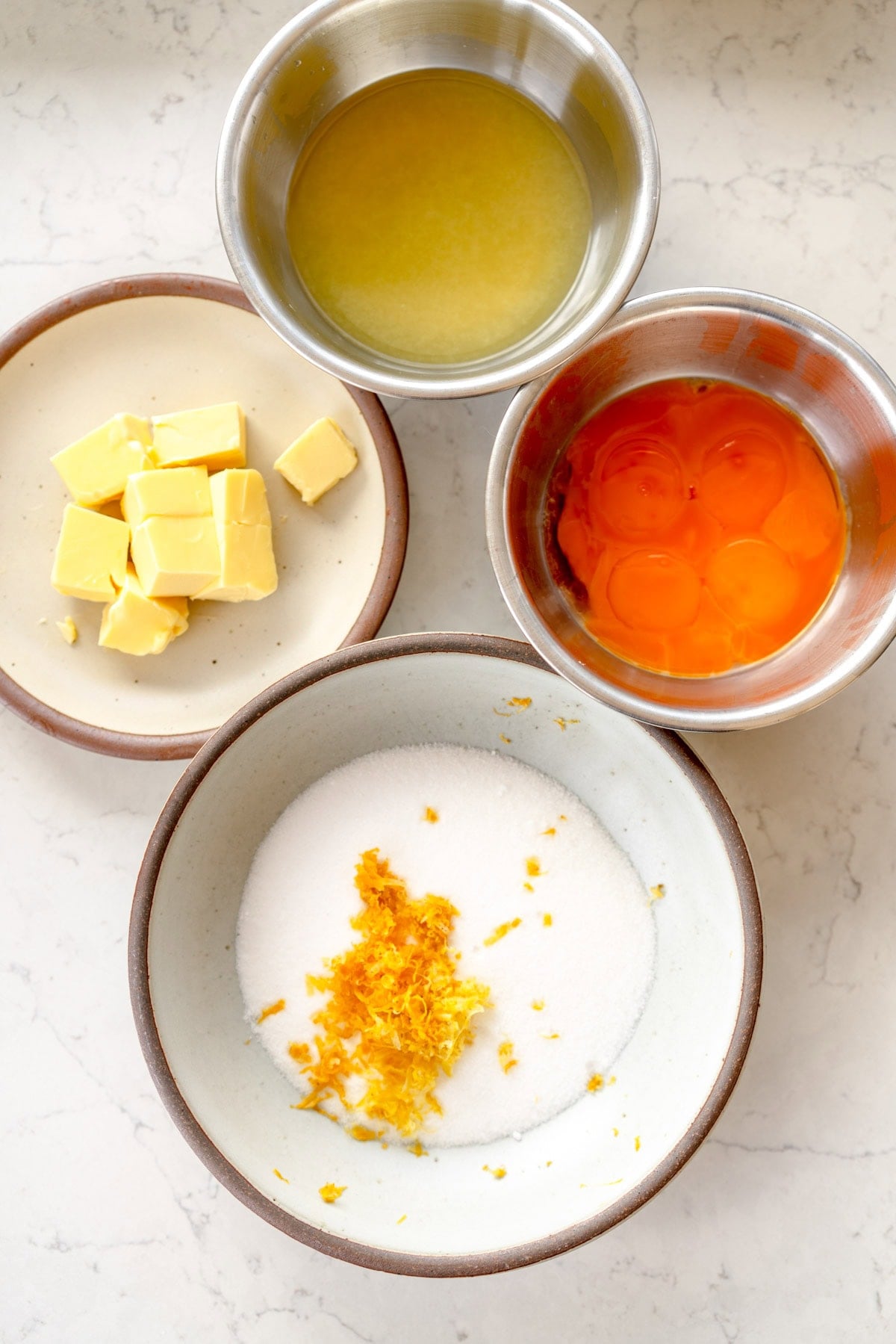
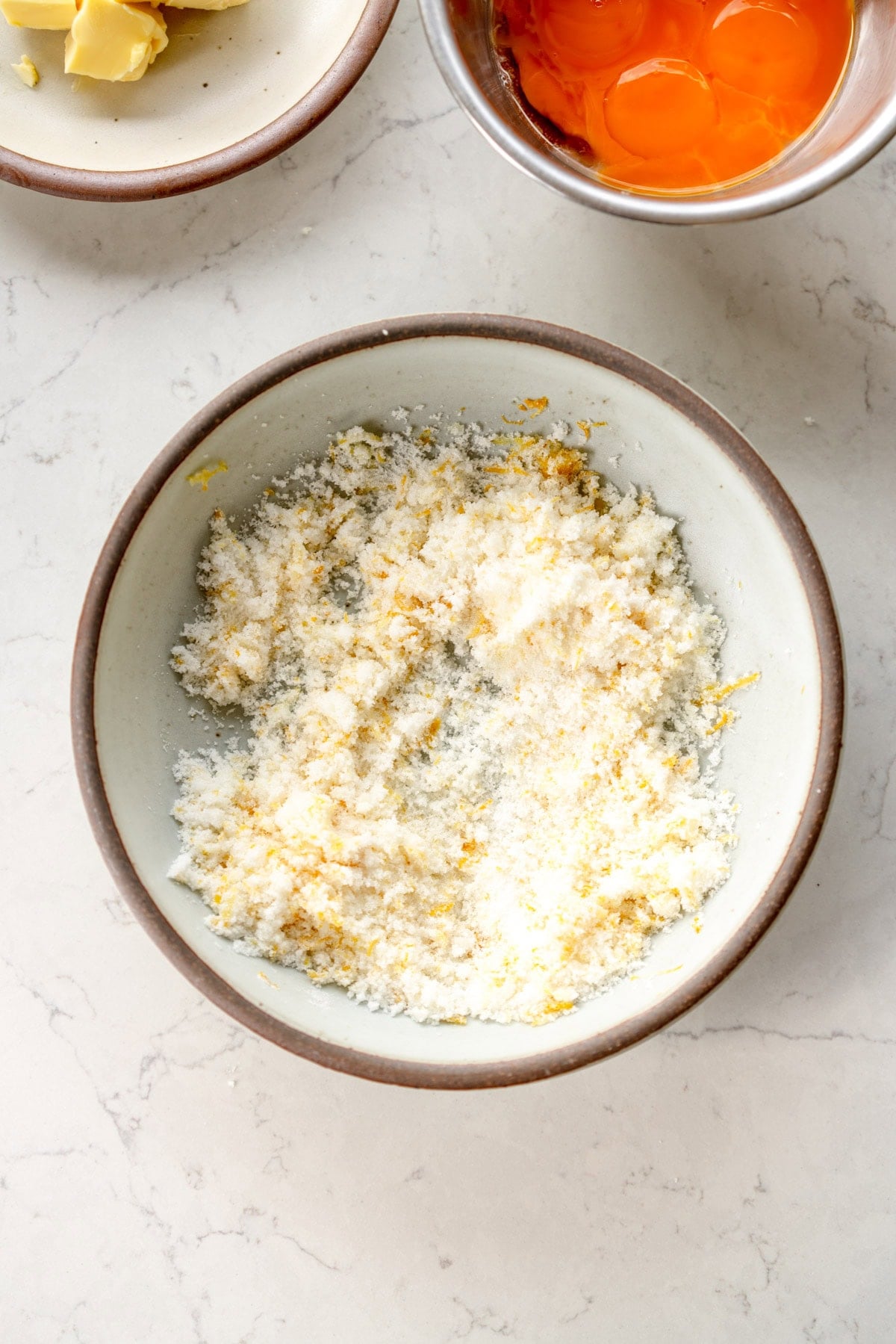
- Place the sugar into a medium non-reactive saucepan - I used a stainless steel pot. Add the lemon zest, and with your fingers, rub the zest into the sugar. This helps to release some of the oils and give an amazing lemony flavour.
- Add all the remaining ingredients into the pot, and stir to combine (the butter will still be in chunks)
- Place the pan over a medium low heat and cook, stirring occasionally with a whisk or a rubber spatula, until the butter has melted and the mixture has smoothed out (there will be little lumps from the zest still).
- Continue to cook, stirring frequently, until the mixture reaches 170°f / 76°c, or when the lemon curd thickens enough to coat the back of a spatula so that when you run a finger through it, it leaves a clear line.
- Place a sieve / strainer over the jar or container you are planning to use. Pour the curd through the strainer to remove any stray eggy bits which might have cooked, and the lemon zest. If you do not want to strain it and prefer the zest in your lemon curd, you can skip this step (I prefer it to be smooth). The curd will seem a little runny still but will be jiggly in the container. If you want the curd to cool quicker, pour it into something shallow like a small sheet pan or shallow bowl. More surface area = quicker to cool.
- Place a piece of plastic wrap directly against the surface of the curd.
- Place in the fridge until the lemon curd has cooled completely. Store in an airtight container in the fridge and use within 2 weeks.
Notes
This lemon curd recipe makes 320g of curd.
Why is your curd so yellow?! I buy free-range eggs, and the yolks are super yellow, which gives me a curd which is borderline orange. If yours is a different colour that is totally fine!
Don't you have to use a non-metal pan for lemon curd? You want to use something that is non-reactive. I don't find that my stainless steel pan is an issue for making lemon curd, but if you are worried, by all means, feel free to use an enamel or ceramic pan. If it tastes like metal, you'll know, promise.
The post Super Silky Lemon Curd appeared first on Cloudy Kitchen.


